About 42 years ago I was taking a summer drive from Huntington Beach, Southern California to Santa Barbara on the central California coast to know better someone I had recently begun dating. When we arrived in Santa Barbara, we noticed a large banner showcasing the Santa Barbara Arts & Jewelry Fair.
Barbara was an excellent pen and ink artist. In addition to photography, I painted in pastel, watercolor, oil and acrylic. We were both interested in sharing a little time at the fair.
I followed the signs to a sprawling one story building. I parked, and we entered into the aroma of incense and the almost overwhelming sight of walls hung with large psychedelic posters. It reminded me of my time in the San Francisco’s Haight-Ashbury neighborhood. The counters on numerous open booths displayed a variety of handmade jewelry and paintings.
For me, it was like returning to the late 60’s and early 70’s. Many visitors and all of the sellers at the booths were dressed care-free in tie-dye shirts, miniskirts, halter tops, and patched jeans. Some like me wore shoulder-length hair. Yes, I was then and continue to remain an unrepentant long-hair hippie.
At the first booth, sat a natural looking young barefoot woman with a colorful headband over her long straight dark hair. A small Peace Sign Pendant with a leather necklace hung around her slim neck. She was reading a well-worn paperback book. “Cannery Row” by John Steinbeck as I recall, through her granny eyeglasses.
I noticed a delicate ring isolated on a little pedestal next to her. I was intrigued by the ring and the small artistically hand painted sign which read, “This ring free to show customers.”
As a counselor and energy worker for many years, I had heard from numerous people about their experiences with Reiki. Whenever I heard about something new that I could use to help people, I studied the process and attended the training to learn more. I decided to learn what Reiki was all about.
In 1998, I attended a weekend Usui Shiki Ryoho Reiki Level I, (Shoden) First Degree and Usui Shiki Ryoho Reiki Level II, (Okuden) Second Degree Practitioner Certification classes in Mount Vernon, Washington.
One essential element of Reiki training includes a process called attunement or initiation. It can be provided in private or as a group. Given several times throughout the training, it supports the Reiki Practitioner’s sensitivity to the energy and to a spiritual connection.
Midafternoon during the first day of the class the Reiki Master Teacher led me to a small room where she began the attunement. Part of the initiation is a tapping of the hands. At the conclusion of the procedure, she walked downstairs to get another student, and I took the opportunity to use the upstairs bathroom.
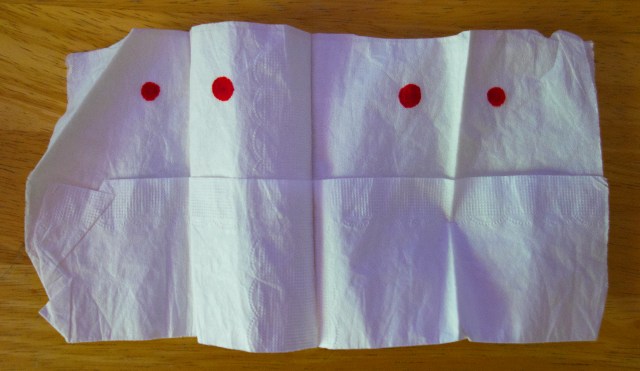
Between the time I left the room and the few steps to the bathroom, I noticed that blood was pouring out of both of my hands. I was concerned that the blood would pour over my hands onto the Reiki Master Teacher’s plush carpet. I just barely made it to the bathroom sink.
For many people, the 1950’s conjure up images of Rock-n-Roll, the Korean War, Sputnik, Jazz, “The Golden Age of Television,” and the sleek and classy cars. On February 3, 1959 “The Day the Music Died” a chartered plane carrying Buddy Holly, Ritchie Valens, and J. P. “The Big Bopper” Richardson Rock-n-Roll musicians crashed near Clear Lake, Iowa in foggy conditions killing everyone.
For me, 1959 conjures up memories when I was involuntarily recruited into the predominantly Chicano/Latino White Fence gang which was considered one of the most violent and powerful gangs in East Los Angeles, while I was living with my single parent family and attending junior high school. The White Fence was the first gang in East Los Angeles to use firearms, chains and other dangerous weapons. I remember having my homemade zip gun consisting of a metal tube taped to a wooden stock and firing a .22-caliber bullet.
Years ago when I was the Publisher/Editor of the Arizona Literary Review, a 64-page monthly literary art and photography magazine, we had an exclusive telephone interview with the actor, James Stewart. I was appreciative of the time we shared with such a generous and interesting person. He died a few years after the interview. I became curious about how he lived his life those last few years. Did he know how much time he had left? I know he was very active in saving elephants, and we ran a full back page advertisement without charge to promote his cause.
Since then, I have developed a curious habit of looking up the biographies of actors while watching old black and white movies. It is interesting to watch their performance while reading about their personal life. I read about their childhood, acting background, relationships, how and when they died. I find it fascinating to know how much longer they lived after they made the movie. What captures my attention is contemplating what they did not yet know. How many more years they had to live. Did their lifestyle, such as drinking or smoking contribute to their death? What would they have done differently? There are times that my heart goes out to the actors who did not know what their future holds for them.
I wonder what it would be like if each of us knew this quality of information during our own life. What would our decisions be and how would they be different? How many of us would want to know this information in advance?
I visited a website called The Death Clock and took their death test. The site provides a friendly reminder that life is slipping away… second by second, reminding you just how short life is. My results? According to the rather unscientific website I have until Saturday, June 4, 2022. Now that just does not seem nearly enough time! It might be wise to live as though I only had those few years left (or less) and live passionately with a foundation of compassion for all living things.
Oscar
The New England Journal of Medicine published a fascinating article on July 26, 2007, A Day in the Life of Oscar the Cat, by David M. Dosa, M.D., M.P.H. Dr. Dosa is a geriatrician at Rhode Island Hospital and an assistant professor of medicine at the Warren Alpert Medical School of Brown University — both in Providence.
Oscar the Cat, was adopted by staff members of Steere House Nursing and Rehabilitation Center in Providence, Rhode Island as a kitten and bailed him out of a nearby animal shelter. He has had an uncanny ability to predict when residents are about to die. Thus far, he has anticipated the deaths of more than 25 residents.
For many years, I have enjoyed watching and photographing Western Lowland Gorillas.
The Western Lowland Gorilla is not the gorilla featured in the book and movie Gorillas in the Mist. That is the Mountain Gorilla which is one of the subspecies of eastern gorilla.
With the benefit of a super telephoto lens, I have learned much about their behavior.
When I have had the wonderful opportunity for closer observation, I value the intelligent interaction we share.
Western lowland gorillas are distinguished from other gorilla subspecies by their slightly smaller size, their brown-grey coats and auburn chests. They also have wider skulls with more pronounced brow ridges and smaller ears. Hands, faces, feet and chests are black and hairless.
Males are twice as large as females, often weighing over 350 pounds, and they have longer canine teeth. Females weigh about 180 – 200 pounds. On two feet, they may stand up to six feet tall.
Noses are the most distinguishing features on gorillas and are as individualized as fingerprints. Their eyes are small and reddish brown. Ears are small and set close to the head. Gorillas cannot swim and may drown in relatively shallow water
The males have a broad, silvery-white saddle as they mature, and are then, called “silverbacks.” Western Lowland Gorillas have many vocalizations, from hooting to pig grunting. They beat their chest and break vegetation as a defensive display against outsiders. They also communicate through facial expressions. Western Lowland Gorillas live about 30 to 40 years in the wild. They live about 40 to 60 years in captivity.
All gorillas are endangered. Western Lowland Gorillas are critically endangered. This is the highest threat category for a species. Illegal hunting of gorillas by humans, mainly for their bushmeat, poaching, mining, slash-and-burn agriculture, and war threaten the Western Lowland Gorillas. In addition, zoos and research organizations purchase some young captured gorillas.
While I was growing up my brother, eight years older than me, would sometimes buy me gifts that he especially liked, for Christmas when he had some extra money. Whether it was a box kite or remote control car, he would always demonstrate the proper way to use it without giving me an opportunity to try it first. He would set it up, try it out, and then promptly break it before I even had a chance to try it out myself.
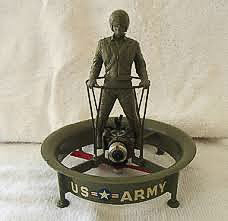
One Christmas when I was in elementary school, I decided to change this pattern. He gave me a gift of a plastic soldier on a gas-powered flying hovercraft platform that came with a remote control. He set everything up, fueled it and just before he launched it, I grabbed the remote control and immediately sent it straight up as high as it would go. While he watched, his mouth open in shock, I decidedly powered it straight down into the alley asphalt until it hit with a terrific explosion. He remained standing with his mouth agape; he turned and looked down at me shaking his head in stunned disbelief. I smiled and walked away delighted. This was the last Christmas gift he ever bought me, and the best Christmas I ever had as a child.
Over my many years of nature and wildlife photography in numerous locations, I have become a curious naturalist. I know a lot about birds and animals because I have studied them for years. Whenever I photograph something new, I return home to my study and thoroughly research them.
I find it interesting that frequently people are in such a hurry to walk through the forest, country, and desert that they appear to miss so many opportunities to observe nature and wildlife. Visit my photography website and view a slideshow of my photography. http://www.stephenbrunophotography.com/.
Once I was photographing a large tarantula when an older couple walked by and the man quickly took a twig and scooted the tarantula off the path and into a pile of leaves. The woman glanced at my raised camera and me and asked if I was photographing the tarantula. I lied and told her no, that I was just observing it. It did not seem to matter much to explain how he interfered with my observation and photography.
Another time I was photographing an Osprey that I had tracked around a lake to a tree high above a well-worn path. Just as I had raised my camera with a telephoto lens and was focusing in on the Osprey eating a rainbow trout, a family walked rapidly passed me talking loudly as they neared the large tree with the Osprey. Unfortunately, the bird became nervous and flew to the other side of the lake. Although disappointing that I had missed the opportunity to photograph the bird that I had pursued so vigilantly, I was amazed that the family never even noticed the Osprey.
There is so much to see when we are in nature if we have the patience and presence to observe. Most people now have a cell phone with reasonable photography capability or a compact camera. If you are not a photographer or prefer to draw, sketch the wildlife that you see and note the location.
People who view my wildlife photography frequently ask how I get so close to photograph wildlife.
Below are a few of my approaches to photographing wildlife close up:
Shifting between my vision, hearing, smell, touch, and taste.
Stopping at the nearest desert, forestry office or interpretive center to pick up brochures, trail maps, and wildlife checklists. Asking about any recent wildlife sightings.
Following my intuition. If the hair on the back of my neck stands up, wildlife could be near!
Being mindful of recent weather and knowing that temperature, sunlight, and precipitation all factor into reading tracks and wildlife behavior.
When I was a child around six or seven years old, a large circus came to town. Somehow, I found my way to the fairgrounds and spent the day talking to the owner and various circus performers. Aside from some potential manipulations and harm that I did recognize may exist but did not feel threatened by, I decided to run away with the circus when they left town.
My home life included some challenging and abusive situations so I figured the circus could not be worse and might offer some promise of better times. Either way, I knew it would be an adventure. What I was too young to comprehend was that this could be a life transition.
I ran all the way home, collected a few small belongings, and then as I was walking out the door my older brother physically stopped me and ultimately kept me from joining the circus when it left the next day. My brother or any family member for that matter rarely paid much attention to what I did. Not even when I roamed the streets of East Los Angeles most nights and early mornings as I had my own bedroom door to exit out to an alley. It is ironic my brother would stop me at this time.
I always wondered how my life would have evolved had I run away and joined the circus. Nevertheless, I was not at a loss for many other adventures throughout my life including recruitment into a gang and later a tour of duty in Vietnam.
Life transitions play a significant and often meaningful time in our lives. Each transition whether it is running away, moving, beginning or ending a relationship, health crisis, picking a college major or selecting a career, generally offers an adventure.
There is no escaping our life transitions. Most of the time in hindsight, we would not want to. Transitions are all about change. Change is all about life. How we choose to embrace the changes determines what we bring to our life and those we touch.
The poignant image of the mother and child at the cemetery is profound and heart-wrenching.
As a Vietnam Veteran, Memorial Day is more than having a day off. It is a day like every day, remembering the Veterans, the military people who gave the greatest sacrifice, their lives, and all military families who give so much.
I believe that in many ways, I shall always be one heartbeat away from my fourteen-month tour of duty in the war.
Years ago, I took 15 people on 50-foot houseboat personal and spiritual retreats to Lake Powell in Arizona year-round. On one trip returning to Prescott from Page, Arizona, I was driving a large van on an isolated two-lane rural road with several of the retreat participants and no other vehicles in sight for miles. I was driving rather fast on the long straight flat road, and I continued looking farther up the road for safety when I noticed some movement.
I slowed the vehicle down without waking the passengers in the back. The person in the front passenger seat and I were mesmerized by what we observed on the road in front of us.
I pulled to a stop and observed two beautiful Collie dogs, each one facing the opposite direction of the road. In the middle were many sheep crossing from one side of the road to the other. There were no people anywhere to be seen.
It was an amazing sight to observe these two majestic dogs independently shepherding the sheep across the road, standing defiantly against any vehicles that could harm their flock. The focus and intensity of their herding instinct reminded me that domesticated dogs are decedents from wolves and use the circling and grouping moves I observed in the Collies.
It wasn’t until the last of the sheep crossed into safely that each of the dogs took one long look down the road and then followed the sheep.
The Collie facing our van looked me straight in the eyes, and I don’t believe it was my imagination that it had a twinkle in its eyes and a half-smile as the Collie jauntily continued its way towards its responsibility with the sheep.
The experience touched my naturalist’s heart and soul.
In a reflective state of mind, I was thinking about my childhood in East Los Angeles, California, all too many years ago. Our single-parent family lived in the home owned by her mother, and it was adjacent to an alley. My bedroom had a private exit.
For several years, beginning when I was around six or seven years old, I would sneak out the door and walk around the city streets after everyone went to sleep. I developed somewhat of a routine walking into cafés that remained open 24 hours, hanging out around the bars, and going to the railroad tracks. It was nearly 35 years before I mentioned these explorations to an older family member who was completely surprised and shocked.
I became known by the kind waitresses who worked at the diners and bars, who would make me hot chocolate during the frigid evenings and early mornings. I could also count on a ham and mushroom omelet for breakfast. A few of the waitresses prepared a grilled cheese sandwich, which is still my favorite today. I did not give much thought to why they did this for me, and I never took it for granted.
Thinking back on it now, they must have thought I was a street urchin without a family and wanted to provide me with some nurturing and a meal. I was a scrawny, skinny unkempt kid with a mishmash of old worn clothes and sometimes slippers. During the several years of roaming the streets, I looked forward to my connection with these kind hearted women.
Other notable people in my life during these formative years were the train-hopping people with the hopes of finding better prospects on the road. They shared stories about some in their community who lost limbs trying to catch a boxcar. And how in freezing weather, they often would nearly freeze to death.
I learned how they would hide along the tracks. They’d run along the train as it gained speed, grab hold and jump into open boxcars. Sometimes, they missed. Many lost their legs or their lives.
They developed a system of signs — scrawled on fence posts and train crossings — to communicate vital information to fellow travelers. I think that they all had nicknames within their extended community, including an honorary one for me.
Becoming friends with them over time, I shared many early mornings and late evenings with this community, eating meals cooked on a campfire or over a metal barrel. I found them very generous especially given the little that they had. I was fascinated with their stories and the songs.
I met numerous families who found themselves lost in less than desirable areas and needed directions back to the nearest safe hotel or freeway. During my walks along the city streets, there were many times that my path crossed with men or women. It was friendly if we connected before. With an initial caution for a first time meeting, we nodded and continued on our way.
Sometime in the future, I may share more of my experiences on East Los Angeles’s streets. Perhaps, in my memoir.
I never felt afraid as it was a grand adventure for me. I rarely felt endangered by anyone I met late at night or early in the morning. I most likely exhibited a mixture of naïveté, curiousness, and cockiness. I imagine that’s where I developed my “street smarts.”
Years later, while dating a high school girl, I shared my experiences on the streets and with the people she derided as hobos. I said how I missed the people living near the tracks and the lifestyle.
She looked me up and down at my typical lack of fashion and said, “Well, you dress like you are a hobo, so you’ll fit in!” I must admit that encouraging her to move on to someone else was satisfying and made me miss my train-hopping friends all the more.
Originally published on April 2, 2010 at Ezine Articles
‘…the most profound personal changes resulting from mindfulness come when a person disidentifies with the contents of his mind and stands back from the melodrama.’ ~Mikulas
Many years ago, I faced a man who clutched a sawed-off shotgun. Visually it reminded me of the M79 grenade launcher, “Thumper,” that resembled a large bore, break-action, sawed-off shotgun during my 14-month Army tour of duty in Vietnam.
As the executive director of a regional mountain mental health agency, I commuted to the isolated cabin in the mountains in the Sheriff’s SUV. The deputy sheriff entered the cabin with me where we found an agitated man named Jeff standing in his bedroom with a shotgun leveled at us as he nervously played with the trigger. I softly spoke with Jeff as I entered the small bedroom. The deputy sheriff backed away partially closing the door behind him.
I remember a special experience I had at Yosemite National Park in California when I was a child. It was around 9:00 P.M. during the summer and I heard a man at Camp Curry call to Glacier Point. “Hello, Glacier!” Then the man at Glacier Point called down with a faint echo, Hello, Camp Curry!” The man at Camp Curry then said, “Let the fire fall!” Then I barely heard, “The fire is falling!” I saw a glowing waterfall of sparks and fire start at the top of a distant mountain and watched as it fell for about 30 seconds.
Later I learned that someone pushed a large bonfire of red fir bark evenly over the edge of the cliff, appearing as a waterfall of fire as it cascaded about 4,000 feet down the mountain. This was the tradition of the Yosemite Fire Fall.
I was so into the fire fall that at first I did not notice a girl about my age also standing alone beside a large tree watching the burning bonfire lighting up the mountain in the darkness. I cannot really explain how it happened but I found that when she and I apparently gravitated toward each other we were side by side, as the fire fall was nearing its end.
We looked at each other speechless after such a wonderful experience and lightly kissed each other on the lips. Then we turned and each ran away as fast as we could in the opposite direction. I never saw the girl again but the combination of the incredible fire fall and my first kiss endeared me forever to the glorious power of nature.





 stephenbrunoblog.com
You must be logged in to post a comment.