“My God, she talks to the birds, and I think she believes they talk back to her.”

American Robin 2020 © Stephen Bruno, Cedaredge, Colorado

When I was an Executive Director of a mental health agency in the California mountains, a brother and sister came to talk with me about their elderly mother, “Mary.” They felt that she needed to be institutionalized or kept in a long-term care facility. They expressed concern about her cognitive ability and safety.

“My God, she talks to the birds, and I think she believes they talk back to her.”

Her brother nodded his head in agreement.

They showed me some legal documents from their attorney. If I agreed that their mother was unable to adequately care for herself, and sign the papers, she could be committed. I was wondering how genuine their concern was and if there were ulterior motives. Either way, I wanted to ensure Mary’s well-being. I told them both that I would visit with their mother and report my decision back to them soon.

In the next few days, my new administrative assistant and I drove along the winding mountain road until we came to the address I was given. I had not called ahead so that we could observe the situation without any preparations from Mary.

The secluded older home was set on a beautiful, clean, clear water lake and nestled in a forest of towering pine trees. We walked past a well-kept front yard. I knocked on the door, and after a few minutes, a tall thin woman with kind eyes and a welcome smile opened the door and looked at us curiously, but she didn’t say anything. I explained that her children were concerned about her. She was dressed in warm winter clothes. I explained that we were asked to see how she was doing. I introduced myself and my assistant.  As she looked us over carefully, she was obviously in some deep contemplation.

After a few moments, she apologized for her lapse in hospitality, and she invited us into her home.

“Come, have a seat at my kitchen table while I make you some of my hibiscus tea.”

We followed her through the comfortable living room and sat at her large cherry oak dining table with a pedestal.

Her home was immaculate with everything in its place. The typical family portraits hanging on walls and knickknacks on the shelves.

“Oh, dear!” She exclaimed.

She turned off the burner under the teapot where the water had evaporated.

My assistant and I shared a subtle glance. I knew what she was thinking as she was troubled after listening to the family members stating their concern and was leaning toward my signing the legal documents. The teapot only increased this certainty.

Mary filled up a different teapot with water, turned on the same electric burner, and encouraged us to try her carrot cake she had baked earlier while the water heated. Each of us was given a generous portion of cake while she took a smaller slice. I was not surprised that the carrot cake was delicious.

“Although unnecessary, it is lovely of my children to be concerned about how I am doing. They are delightful children. I’ll always think of them as my young children even as they have grown into adulthood.”

After a few moments, Mary got up and poured the three of us tea and brought us sugar.

“How do you like living in the mountains without nearby neighbors, and have you ever felt lonely.”

“I love living here. This is my home. Oh, heavens, no, I have my friends who visit with me frequently.”

Again my assistant and I shared a curious glance.

“After we finish our tea, I would like to show you my pride and joy, my garden.”

I can see why she loved the garden; the landscaped garden was so peaceful and beautiful with a variety of plants and small trees. Every detail was impeccable.

Almost as soon as we sat in the three comfortable lounge chairs, the birds arrived. During the following two hours, these included Steller’s Jays, Scrub Jays, California Thrashers, woodpeckers, Mountain Bluebirds, Dark-eyed Juncos, nuthatches, and Northern Flickers. The tranquil melody of songs was inspiring.

“I don’t see any birdfeeders.”

“Oh dear, I never feed the birds as I know they have plenty of food provided by nature.”

As we enjoyed the beautiful garden, more birds came to replace the previous ones. From the interactions of Mary and the birds, it became evident that she did not need to feed them to encourage their visits.

“If you excuse me for a moment, I want to welcome my bird friends.”

With that, Mary walked around the garden, addressing each bird who seemed intently on connecting with her. It was clear that there is some communication between her and each bird. When she called to the birds, they arrived singing and responding to her softly communicating with each one.

“Is there is something else I can get for you?”

I looked at my assistant, and she shook her head no, and I said that there wasn’t anything else that she could do for us.

I asked if there was anything we could do for her since she did live alone. She said, not really. She thoughtfully mentioned that once in a while, she had become rather forgetful about things like a tea kettle boiling over, and occasionally why wondering why she walked into a room until a few minutes later, she’d remembered why.

After several questions about her living conditions that I asked as unintrusively as possible, she shared about her early life and her love for her children. She had been widowed for several years.

It was true that she was becoming forgetful, and I believed Mary required help to make sure she was more careful about things like not letting her water boil over on the stove. Also, I thought someone to help her shop, provide light housekeeping, and keeping a nurturing eye on her would be necessary. Although she was fiercely independent most of her life, Mary felt that her children would be relieved with her receiving a visiting caretaker.

On my recommendation, she remained in her home with a visiting caretaker. I believe that Mary flourished rather than forced to live in a restricted environment. I’m confident that the birds also benefited.


I May Attend My Own Eulogy

20160706102246189768

For as long as I can remember, I’ve wondered why we fondly share all the meaningful remembrances about someone after their death rather than when they were alive. When I read about celebrities and others and the beautiful statements made about them from their peers, I can’t help but think it would be great if this information we shared in their eulogy was told to the person while they were still with us.

As editor of both my high school and college newspaper and a Journalism major in my first years in college, I know that newspaper morgues have prepared obituaries that can be updated and put out quickly when a well-known person passes on. I understand the value to family and friends in the general public to be reminded of the person’s qualities and things that they did to make a difference.

It seems to me there’s something missing with this process when the person isn’t around to hear these heartfelt sentiments and how much of a difference that may have made.

I wonder what would happen if we shared with people in person, how much they mean to us, and what a difference they make in our lives.

“This town ain’t big enough for the two of us.”

18-07-10-00297

Years ago, when I lived in the mountains in Southern California, I owned a house in an area called the Valley of Enchantment. It certainly was enchanting for my Miniature Dachshund companion, Quincy. You may have previously read my blog posts about Quincy and his adventures, and by popular request, I am sharing another of his true tale.

The two-story structure had a wood deck that looked out the back door and wrapped around one side of the house above the basement, leading to stairs that climbed to the street where my vehicle was parked.

One cold crisp, cloudy winter afternoon, I observed Quincy beginning his “morning constitutional” along the deck on the way to the stairs when he suddenly stopped and looked up towards the driveway beyond my view.

I slowly peeked around the corner and saw a large Mastiff dog quickly and jauntily unrestrained presence stopping at the top of the stairs surveying the deck and Quincy with a curious tilt of his massive head.

Dachshunds were bred to flush out Badgers and can be fearless with other animals. Nonetheless, Quincy was about a quarter of the size of this self-assured Mastiff.

Each of them found their center of gravity and squarely facing each other from a distance.  A decision to call the bluff and with an air of confidence, the Mastiff began to slowly descend the stairs leading straight to where Quincy held his ground.  They each stepped forward five paces, their toenails clicking on the wood deck with every step. Each of them must be thinking, “This town ain’t big enough for the two of us.”

After a while, the low deep growl of the Mastiff broke the silence. Quincy stood his grand, silently breathing heavily and bound by a personal code of honor to protect the homestead. It was difficult to tell who was standing their ground best for several minutes until the water vapor from the heavy exhaling cleared the air.

Then, my unusually large Great Dane, Bruno, (yes, I know I he was my namesake – and, he never complained) came from behind me unbeknown to Quincy and locking eyes with the Mastiff. Long seconds passed.

When the Mastiff slowly began backing up the stairs, Quincy became bolder and started barking as he moved forward. The Mastiff glanced at Quincy like the morsel he could be but never lost eye contact with Bruno, who was so intimating he didn’t need to move or to make a sound. I was curious to learn what was going to happen next.

Quincy chased his adversary back up the remainder of the stairs and halfway down the street. When he returned to the deck to see me standing there alone, his chest was so puffed out, I thought it might burst from pride. He never knew the influential support he received from Bruno, the Great Dane.

Nevertheless, from that day forward, Quincy effectively chased away every big or small animal, including a large coyote. To watch the dramatic change in him, you’d think he was backed up by a pack of wolves.


Transformed by Perspective, Interpretation, and Compassion

Decisions 2019 © Stephen Bruno

Years ago, I was interviewed on television news stations by reporters after someone killed themselves, especially if the individual was a teenager or younger. My background included directing a suicide prevention hotline and counseling people who were experiencing suicidal thoughts in a clinic setting.

One reporter frequently interviewed me. She was always very professional and directed her questions about what people can do to prevent suicides and how to help loved ones when a suicide occurred.

She was one of those reporters you probably have seen with her hair coiffed, perfect attire, attractive in the classical TV personality way, and always expressing a professional attitude.

Uncharacteristically after an interview on camera, she pulled me aside away from the television crew.

“I don’t understand how someone can become so distressed and depressed that they want to kill themselves. It just doesn’t make sense to me.”

I shared my thoughts behind the reasons that people can become so despondent that they view suicide as their only reasonable alternative.

“I don’t think I will ever understand how someone would throw away their life when there were always alternatives and possibilities and support to help them move forward in their life.”

She described her idyllic childhood and acknowledged she was unable to relate to suicide as a means of reacting to stress.

I offered her my years of professional experience working with people who had reached their mental and emotional limits and viewed suicide as their last resort. I could tell that she was unable to relate to their desperation. She was interpreting their behavior from a more intellectual perspective.

A few months later, I was again interviewed by the same reporter after someone in the city committed suicide. She was as usual very professional and objective in her television interview questions, but I sensed something was different.

The interview took place in my backyard near a paddock where our horses lived, and she asked if we could walk around the paddock and away from the camera crew. I was curious about what she wanted to talk about. I waited patiently as we silently walked.

“I get it now. I understand how someone can reach such a level of despair that a person does not feel it’s possible to ever get past the feelings of desperation and helplessness.”

She then haltingly described a recent personal experience that shook her to the core resulting in her feeling for the first time in her life suicidal. It was an amazing transformation of this always professional person who prided herself on perfection, now privately exhibiting her vulnerability in all of her honesty and sensitivity.

I supported her moving beyond her traumatic reactions and finding ways to embrace the changes necessary so that she could move forward in a natural, grounded direction.

The next time she came to interview me about a young person who had killed herself, I noticed that her interview approach was different. There was a depth of compassion and understanding that had not been there before. Her questions had changed, and her responses, while still professional, were more personal and meaningful.

We never spoke about how she was different, and we didn’t need to have that discussion. It was a life transformed by perspective, interpretation,  and compassion. Every interview with me that followed, she asked more in-depth questions, a meaningful eye connection emerging from her soul, and the partial smile that she shared with me said it all.

“Where Have All the Flowers Gone” – The Kingston Trio

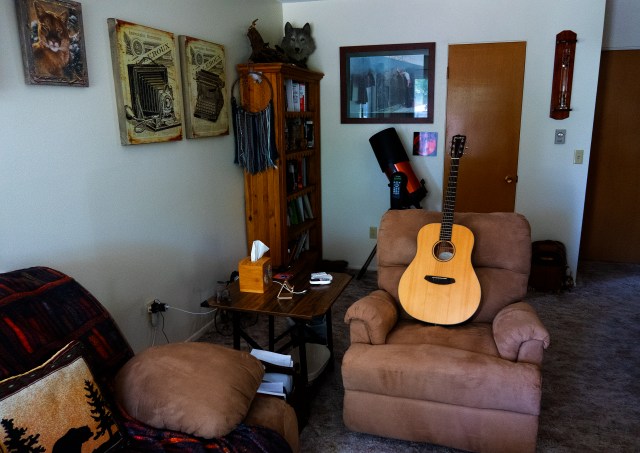
My new acoustic guitar 2019 © Stephen Bruno

I had a guitar in the early 1970s, and I was teaching myself how to play while a counselor at a free clinic in California. After guiding a young man from committing suicide, I loaned him my guitar for inspiration. It must have worked as he never returned it, and I felt he needed it more than I did.

It is 49 years later and time for me to follow that initial passion of mine. One goal is to learn how to play meaningful songs on the guitar and lead the diverse groups that I teach in singing folk songs, including some of my original songs telling relatable stories and fusing some with other genres.

Yesterday I purchased an acoustic Breedlove guitar and took my first one-hour lesson. An injury to my shoulder and surgery on my thumb creates an obstacle that I am embracing. Yes, and being 70 years old while learning how to play the guitar perhaps poses another challenge.

I believe that my passion is greater than the challenges, and in time, I will be joyfully singing along with the people in the gatherings while playing the guitar.

The Opposable Thumb


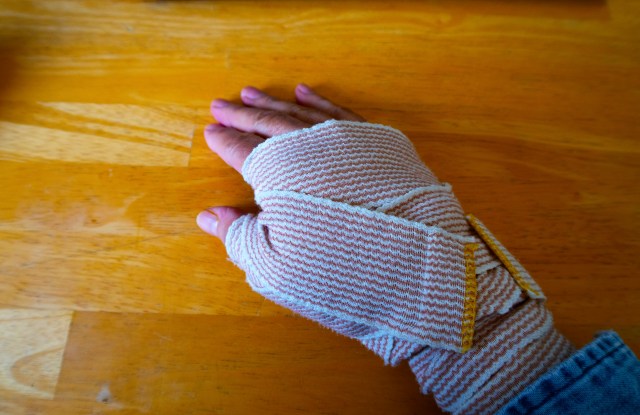
The day after thumb surgery 2019 © Stephen Bruno

Perhaps you’ve heard about the opposable thumb that we humans share to a degree with all primates. I have known this relationship with primates since I was a child. Of course, as a naturalist, I understood the importance of the opposable thumb. However, it took an unexpected injury to learn just how significant our opposable thumb is to us, humans.

One morning I awoke intent on performing my countless routine tasks and getting out in nature to photograph wildlife. I quickly realized that whenever I moved the thumb of my dominant right hand in a specific direction or touched something too hard, I experienced intense pain.

I can’t recall having a trauma that created this unexpected situation. I had recently moved to a charming small mountain town and for the first time in many years had to shovel snow on my driveway. I thought maybe that was the cause, but I don’t remember the thumb being painful soon after the snow shoveling. I can’t think of anything that had occurred within a few weeks of the pain that I had done to create this condition.

I could not easily turn the key on and off my vehicle, write using a pen or pencil, brush my teeth, open jars, and at least twenty other normal activities. It soon became apparent that how this occurred was not as important as how it had suddenly and dramatically changed my life.

The intensity of the pain was distracting, to say the least not to mention how restrictive my life had suddenly become. I’m certain that if any of you have experienced what I’ve described some of this is not new to you. Each day I am amazed at the new tasks that I could no longer do without pain.

This month I had surgery on my thumb, and I continue to encourage healing. I remain optimistic in my prognosis.

Throughout all of this and in spite of the pain and definite limitations, the majority of my thoughts are a wondrous curiosity about the power and influence of our opposable thumb and how vital it is in our daily life. How could I have missed this obvious awareness?

Perhaps, it’s true that we don’t fully appreciate something until we no longer have it. I will look at other aspects of my life that I’ve taken for granted with equal dismissal.

Unapologetic Hippie

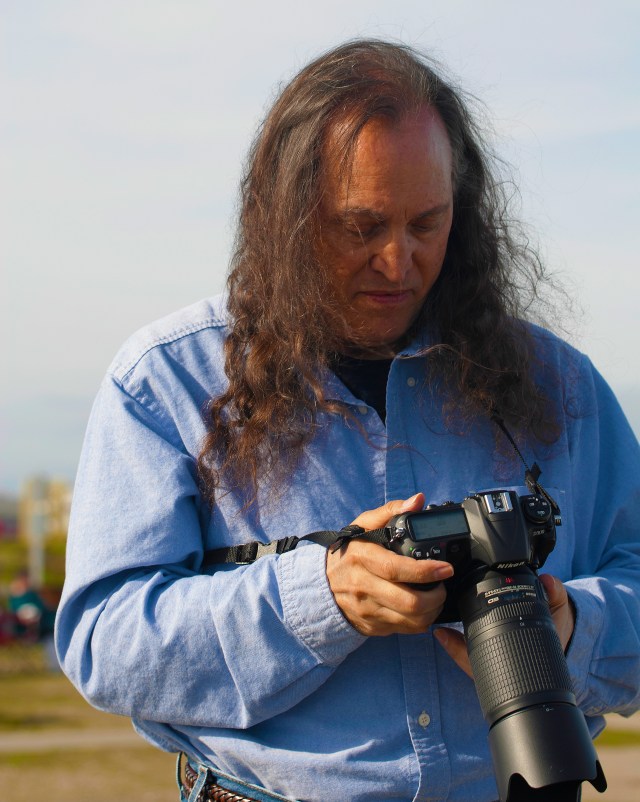
Stephen Bruno while photographing wildlife and nature.

I took the road less traveled by, and that has made all the difference. 
Robert Frost – The Road Not Taken

Recently I visited the local medical office which included a nurse drawing blood for routine tests.

During the procedure, she noticed my shoulder-length hair, beard, and loose-fitting clothes.

She asked with a measure of innocence and curiosity, “Are you a Hippie?”

I smiled and responded, “Yes, I’m an unapologetic Hippie.”

I still favor long hair and casual, often unconventional, dress including tie-dyed shirts with peace signs. I continue to wear a beard and long ago gave up my Birkenstocks sandals. I gave them to a woman to share how it felt to ‘be in my shoes.’ I adopted a strict vegan diet based on unprocessed foods, supported animal rights. and I practiced holistic medicine all of which I am recently revisiting.

I would have attended the 1969 Woodstock Festival near Bethel, New York, from August 15 to 18, 1969, which drew between 400,000 and 500,000 people if I was not already serving my 14-month tour of duty in the U. S. Army in Vietnam.

Some hippies “sold out” and became part of the materialist, culture. I’ve done my best not to sell out. I still embrace the Hippie values of peace, love, compassion,  idealism, and Zen philosophy. I believe in trade or barter and sliding scale fees.

Like Frank Zappa, I avoided drugs and preferred the “natural high,” through photography, writing, listening to music, dancing, camping, and other natural activities.

I am old enough to have earned every wrinkle in my face, puffy eyes, scar on my body, all the silver in my receding hair, and nose marks from my eyeglass frames.

And yes, I remain an unapologetic Hippie.


Loving My New Home Town

img_2765

Historic Downtown Cedaredge 2019 © Stephen Bruno

I love the charming small mountain community with its three blocks of historic downtown, one traffic signal, minimal traffic, two banks, a community art center, shops, restaurants, Cedaredge Town Park, and about 2,266 residents to mention a few wonderful things.

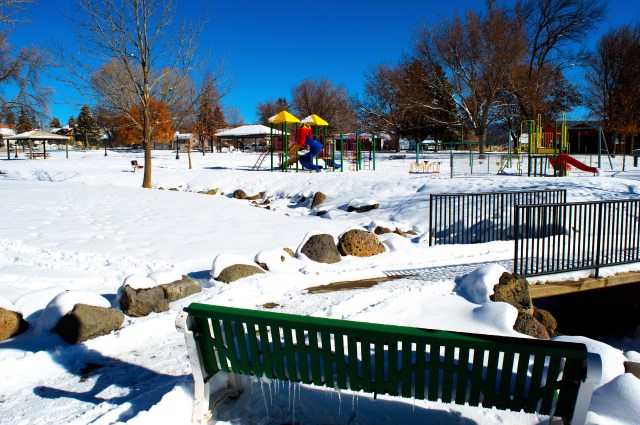
Cedaredge Town Park 2019 © Stephen Bruno

It has been a little over a month since I relocated to the Cedaredge, Colorado at an elevation of 6,264 feet, and my friends have inquired about how things are working out. They know that one of the primary reasons for moving to the mountains was that as a wildlife photographer I wanted to connect with and photograph the diverse wildlife and nature.

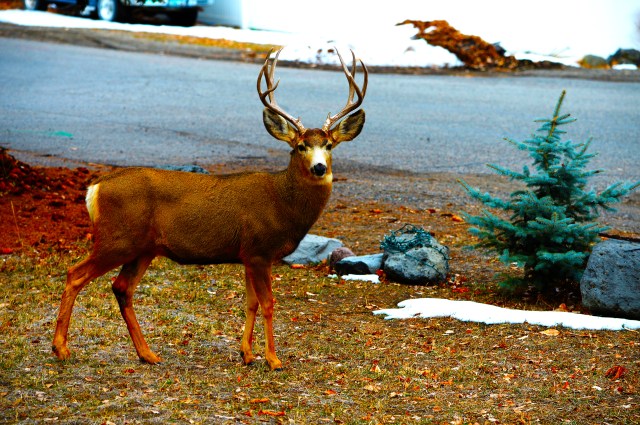
Mule Deer Buck 2019 © Stephen Bruno

Continue reading

Wildlife Print Adoption

2017 © Stephen Bruno

I created this blog, Curious Wordsmith, to share my miscellaneous musings, writing, and more in thought-provoking, intelligent, informative, humorous, and entertaining posts. Curious Wordsmith is now the foundation for my memoir.

I’ve been rather reluctant to write a memoir although I have had some fascinating experiences to share. I finally agreed to write a memoir when my daughter implored me to write about my experiences when I was in the US Army stationed in Vietnam for my 14-month tour of duty. She especially wanted my granddaughters to know what it was like for me in Vietnam.

It wasn’t that much of a stretch to think about including nonmilitary experiences which of course are the greater part of my life. With more time available since I recently withdrew from all my social media except my websites and this blog, I’m going to write blog posts more frequently.

As most of my faithful blog readers are aware, a year ago this month I moved from Prescott, Arizona to Grand Junction, Colorado. In a few days, I am moving to the small charming mountain town of Cedaredge, Colorado. Moving in the winter can have its challenges. However, I can’t think of a better season to cuddle up in my Pendleton shirt jacket with a hot cup of tea and edit some of my books in preparation for publication next year.

In my current home, I had mounted some of my framed wildlife photographs to enjoy and share with friends and visitors. Soon after I found my new home in Cedaredge, I knew that although I had these framed wildlife photographs for quite a few years, they were not going to come with me this time. In the past, I’ve had offers from fine art photography lovers to purchase my prints from my photography website or when I had gallery shows. This time I knew that I didn’t want to sell them. I wanted to gift them to people who felt drawn to the images and who would receive pleasure having them in their home.

I wasn’t quite certain of the logistics in sharing the framed prints on my wall at home and who would receive them. It’s been fascinating to observe the process of how each print finds a home. The people who adopted my wildlife prints include a FedEx driver, a Reiki Master Teacher who recently graduated from one of the certification classes I taught, a family that receives my Life Coaching, a grocery delivery driver from Safeway, GrubHub delivery driver, pizza delivery driver, and a house cleaner. Now all of my framed wildlife photography has found a caring home.

It has been an unexpected pleasure in learning how my wildlife prints have found the right family home where they truly belong. I believe that this is the beginning of a tradition that I will continue.

Christmas Magic

Christmas 2006 © Stephen Bruno

Yesterday I took a break from packing and then visited a nearby restaurant for the first time.  A waitress in her 30’s came and took my meal order to go and kindly offered to bring me something to drink while I waited.

After a while, she returned and began a friendly conversation. I learned that she was from Tennessee, which explained her accent. She added that her husband and children were still there while she was staying with her father in Colorado who was ill and challenged with cancer.

I could tell that she deeply missed her family in Tennessee.

“I’m glad I’m sharing the holidays with my father, and that he is not alone now. We are very close.”

We talked more about her father’s health issues and how she flies back home for a quick visit whenever she can.

“I could never leave my father alone for long while he goes through his illness. My father does not have family or friends or anyone in Colorado to take care of him, and even if I could afford to pay someone, I would never do that. He is family, and I need to do what is right by being here no matter how long.”

She became busy with other customers and then returned with my meal telling me that she added an extra amount of salad for me.

I looked deeply in her eyes with compassion and connecting with her essence, and I asked her a question.

“Do you believe in Christmas magic?”

“I do believe in Christmas magic,” she said without hesitation.

“I believe you have some Christmas magic coming to you.”

“Really?”

“Yes, you have earned it.”

“What’s your name?”

“Stephen.”

“I’m Kate. It is nice to meet you.”

With a parting glance over my shoulder, we smiled with our connection and nodded in spiritual understanding.

Given what I know about sharing Christmas magic, I knew that this was one Christmas she would remember for many years.

Embracing New Adventures

They are packing and are moving to Cedaredge with me.

The end of this year and the beginning of the new year brings many adventurous changes in my life and hopefully for yours. I’ve always told friends that the only fear I have is remaining the same tomorrow as I am today. Perhaps, this is why I’ve been a risk-taker my entire life.

I’m moving very soon from Grand Junction, Colorado to my new mountain home in Cedaredge, Colorado where the Grand Mesa’s southern slopes meet the Uncompahgre and Gunnison River valleys. The charming mountain town offers friendly neighbors, orchards, and access to dozens of trout lakes. I love that the town has only one traffic signal and just a few historic downtown blocks of diverse small businesses.

Late fall brings bushels of apples on the town’s many trees. The large apple tree in my backyard brings dozens of deer to nibble on the apples. I look forward to connecting with them and taking some photographs to share. This past October, I attended the annual Applefest held at the Cedaredge Town’s Park within walking distance from my new home. Applefest brings over 20,000 people and it is free to attend. I had an amazing time visiting the over 200 vendors, wonderful music, and tasting the delicious food.

Cedaredge genuinely feels like stepping into a Hallmark movie with a sense of community, natural beautiful surroundings, and a wonderful quality of life. Yes, I know, I’m a hopeless romantic, and I do enjoy the Hallmark Christmas movies this time of year. I can believe in experiencing the magic of Christmas. Seriously, wouldn’t you want to have this pleasure? Moving to Cedaredge means I can have the pleasure all year long.  I believe in sharing community with compassion. Today I arranged to volunteer as a server for the Cedaredge Christmas dinner this year. Over 300 people are expected. The cost is a donation but not required. The dinner location is within walking distance of my new home.

Just 15 minutes or so from the town on the Grand Mesa Scenic Byways there are old-growth forests, aspens, meadows and 300 beautiful lakes that lead to the Grand Mesa mountain. I’m planning on taking countless color digital and black and white film photographs of wildlife and nature throughout the four seasons to share. This is one of the reasons I wanted to move to Cedaredge.

One immediate change is that I am honoring my values and principles and I am closing out my Facebook accounts effective today. For a while now, I have been concerned about the direction the Facebook company is moving. From the company’s reactions rather than responses to the community’s trust concerns, I do not believe that Facebook will institute necessary positive changes anytime soon. Nevertheless, I’ll share on this blog, the same positive posts I have on Facebook.

I am encouraging my supportive friends on Facebook to connect and follow me by registering on this blog. You’ll receive an email notice every time I share a new post on the blog. You can now view photographs that I have frequently posted on FB for many years on my photography website at Stephen Bruno Photography. My newest photographs are in the Recent Photo Shoot gallery. The benefit is rather than a select few images I’ve posted on Facebook, you can now see many more images from my photo shoot.

Next year is the time I plan to publish several novels, nonfiction books and poetry, and short stories that I’ve been working on for an eternity. Well, at least it seems that way. I know that I have more wrinkles, less hair, and more bags under my eyes than when I began these books. The beautiful charming mountain atmosphere, wild critters, and friendly people can contribute to my creativity and productivity.

To love means loving the unlovable. To forgive means pardoning the unpardonable. Faith means believing the unbelievable. Hope means hoping when everything seems hopeless.

~Gilbert K. Chesterton 1874-1936, British Author

Not Exactly My Finer Moments.

Mallard Duck, 2016 © Stephen Bruno

Many years ago, I was the Publisher and Editor of the Arizona Literary Review, a monthly literary, art, and photography magazine. Today I was sorting through some of my papers for better organization when I found a copy of the June 1992 issue of the magazine. It was a bit of nostalgia to look through Arizona Literary Review.

While looking at this June issue this morning, I valued high-quality literary, art, and photography that people submitted. When I created the magazine, I imagined that it would eventually reach across the country. I had no idea that people as far away as Paris, France would subscribe and send their submissions, including well-established authors.  As a writer, artist, and photographer It was a pleasure providing opportunities for contributors to be published, some for the first time. Decades later, I happened to meet a neighbor who reminded me that I published his photography in the first issue of the Arizona Literary Review. This visibility started his professional career, and he became a renown photographer.

I read an article in the issue that I wrote in my column, From the Publisher & Editor titled, I Fell in Love with Marie Antoinette, about imagination, creativity, and sometimes not taking ourselves too seriously. I would like to share this with you in my blog post as I believe there is still some relevance.

When we fall in love, I believe that the latent characters who normally reside passively within our psyche suddenly emerge. Our emotions intensify creating illusions of reality. Romantic songs play “just for us,” and the world revolves around our immediate needs and desires. You know the sense when the flowers are brighter, the air is crisper, and the birds sing sweeter.

With creativity, passion is also aroused and inhibited, equally often without satisfactory resolution. The quality of this relationship to creativity determines how we share our passion. Sometimes it is expressed by writing, photography, painting, dance, or music.

There are moments when I can recall a furtive glance by an inquisitive squirrel; the whooshing sound of wind embracing the tall pines; the distinctive aroma of summer blossoms, and cherished memories for a high school sweetheart. The haunting words and melodic rhythm of the 60s song, We got to get out of this place, revive the indelible melancholy and mania for my 14-month tour of duty in Vietnam. Then these memories vaporize just as suddenly.

My passion is to understand how this lingering tenderness in such sensorial experiences manifests itself in unrestricted drawing, painting, writing, and photography. I feel drawn into and captivated by this intimate involvement with my raw emotions in an undefined desire for creativity.

The arduous process of establishing an authentic relationship with creativity is an intimate, passionate process. Having our work published is a collective external experience. Poetry, fiction, photography, music, dance, and drama caress the heart soul and spirit. As an artist, writer, and photographer I appreciate the creative depth from others who also enjoy these mediums.

Relationships real or imagined are a wealth of resources for story, character, and plot development. Several years ago, I indifferently requested a book on Marie Antoinette through a popular book club. To my astonishment, I identified with her struggles, dreams, losses, adventures, letters, and trauma dramas.

I began writing a historical novel reflecting on the essence of Marie Antoinette.  The positive elements of her life and personality that are less known. Sometime during that year, I fell in love with Marie Antoinette and rediscovered my creative passion soon after I published the Arizona Literary Review. Many years earlier as Editor-Chief of my college newspaper I produced the weekly publications with great enthusiasm, but without as much passion.

I believe that we stimulate our inspiration when we experience the unusual in the familiar. In my thirties, at an airline terminal, I sketched on an imaginary drawing pad the divergence of passengers waiting to board a flight. I observed their mannerisms, conversations, and facial features which I committed to memory for later retrieval in one of my novels.

Startled out of my reverie of character sketching, I heard the last few words of my flight’s departure announcement in the loudspeaker. Reaching for my portable art bin, I remembered that the drawings and art supplies were imaginary.

Feeling chagrined, I hurried past all the passengers to the front of the line along the tarmac towards the America West Airlines aircraft so that I could get the window seat that I preferred. At that time no one had assigned seating. Unlike at many airports today, everyone walked along the tarmac and climbed the mobile stairs to board the aircraft.

Consumed with my recent creative energy and overly stimulated imagination, I climbed the portable stairs leading to the aircraft’s forward cabin ahead of the other passengers. On the aircraft at the top of the stairs, a uniformed Flight Attendant politely greeted me and asked to see my airline ticket. With a curious appraisal of me, she suggested that this was not the correct aircraft that I wanted. Trying to nurture me through my confused gaze, she said that the flight I wanted was on the other side of the aircraft.

With a slight half-smile, she pointed to the last of the passengers on my flight who were on the tarmac walking to the other side of the aircraft. I couldn’t help myself I and asked if she was sure that this aircraft was not my flight. Once again, with a measure of infinite patience and smile, she said that she could assure me with absolute confidence that I was not going anywhere on this aircraft.

Continue reading

Cross Between a Saber-Tooth Tiger and a Fire-breathing Dragon

Stephen Bruno

When I was in the first grade in elementary school in East Los Angeles, I had a serious accident outside the classroom. My symptoms included a nosebleed, swelling, bruising, crooked nose, black eyes, trouble breathing and a “cracking” sound when touching my nose.

I was rushed to the hospital by the school nurse who had me hold an ice pack on my nose. In the ER the doctors examined me and diagnosed severe facial fractures that included a broken nose, a septal perforation, and a deviated septum. They decided that I required immediate surgery.

I was prepped for surgery, given a local anesthetic and quickly brought to the operating room. The surgical nurses positioned me on my back, and I remained awake for hours watching several otolaryngologists working on my nose. Whenever the local anesthetic wore off, I let them know, and they provided more help that I appreciated. The operation was all a surreal experience especially since I was only six years old.

After the lengthy and intensive operation, a surgical nurse and several orderlies brought me to a post-surgery recovery room for monitoring. A splint was made to hold the nasal tissues in place until it stabilized and to protect the nose from accidental bumps when I slept and help it heal normally.

The next day, the nurses brought me to a children’s ward for recovery. The ward was a large rectangular open room with many children my age and a little older lying in their beds. Thirteen years later I was reminded of this setting after being drafted and sharing a similar large room with wall-to-wall beds during Basic Training at Fort Ord, California. The doctors told me that I would remain in the ward until I began to heal for several days, weeks or longer.

The kids could tell by the bandages on my nose and the sterile strips of gauze hanging out of each nostril that I recently experienced nose surgery. Of course, after the anesthesia wore off, I was in a lot of pain and continued to receive pain medication and antibiotics during my stay on the ward.

I began to get to know each of the kids in the ward out of curiosity and the means of distraction from the ever-present pain. Eventually, I found out that each of the children in the ward had a terminal illness and most of them had lived on the ward for months and some longer. It didn’t take long for me to feel humbled by their tragic medical circumstances while I only had a broken nose that required healing. I didn’t know what my nose would look like after the surgery and recovery. However, I knew my life was not in imminent or probable danger from the nose fracture.

I was very impressed with each of the kids and how they handled the challenges of immense pain, isolation from their family, countless medical tests, and insufferable boredom. I learned a lot about myself and other people that have lasted a lifetime from this experience that transcended the surgical trauma and recovery.

When finally, I was released from the hospital and sent home for more weeks of recovery, everyone in the children’s ward including the nurses shared a heartfelt sendoff. It was a bittersweet time given that some child abuse issues were waiting for me when I returned home.

During my recovery at home, there was still considerable bruising as well as swelling, and I had to make sure that my head was elevated, especially when sleeping or lying down to prevent further or prolonged swelling of the nose. I had to continue with the long strips of gauze hanging down out of my nostrils to soak up the blood. I imagined looking like a cross between a Saber-Tooth Tiger and a fire-breathing dragon. Nonetheless, I couldn’t stop thinking about the kids and especially some of the boys I talked with the most.

I still have a deviated septum, and my nose never quite looked the same. I have received comments like, “Your nose is an interesting conversation piece.” Although I am uncertain of exactly what that means, I have gracefully adopted my new nose.

After more of my recovery, I gathered up all my classic plastic green army men soldiers with a few military vehicles and accessories. I asked my mom to take me back to the children’s ward and wait in the lobby. Talking with the nurses who kindly remembered me, I was sad to hear that some of my newfound friends had died from their illness since I last saw them. It was too heartbreaking to give the toys in person, so I arranged with the nurses to anonymously share the gifts with my remaining friends and to see that everyone received something to sustain their playfulness during the countless boredom.

Frequently over the years, I’ve thought a lot about my time on that ward and each of the kids. We shared life and death conversations only young children with a terminal illness can have. It certainly puts into perspective the traumas that we must face when we think of what others must endure, and I began to embrace unconditional compassion as a lifestyle to the best of my capacity.

Heart & Soul

When I was in my late 20s, I had an unexpected experience with a noted cardiologist that touched my heart and soul. Consider playing this video as you read the post, before or after.

I was the Executive Director of a mental health agency in California. One afternoon the President of the Board of Directors asked to meet with me in my office. Although not uncommon to meet with me, she sounded excited rather her usual calm. After a warm greeting, she said that a close friend of hers was the Director of Cardiology at a major Adult Cardiology and Heart Surgery Hospital. I had recently written and received a large grant for the mental health agency, and she wanted me to meet with the Director of Cardiology and discuss my writing a grant to expand their Adult Cardiology and Heart Surgery departments as soon as possible. That same day I called the Director of Cardiology and scheduled an appointment to meet with him the next day as he was very eager to discuss the possibility of a grant.

I expected an administration staff member to initially offer a tour of the hospital and especially the Department of Cardiology. And then I’d sit down with the Director of Cardiology to casually discuss what the medical needs were, and the time frame for the grant. When I arrived at the 900+ bed hospital, the Director of Cardiology was nervously waiting for me in the lobby. He was exuberant in his appreciation of my willing to write a grant.

He ushered me into a large wood-paneled conference room with many men and women physicians and staff sitting around a large rectangle oak table. The Director motioned for me to sit at the head of the table, as he leaned against a large laminated Anatomy of the Heart Anatomical wall chart.

He introduced me as the Executive Director of a mental health agency who was going to use my grant writing expertise to obtain enough money for expanding the Adult Cardiology & Heart Surgery departments.

“Stephen, please give your presentation to the department heads and staff about how you are going to bring us an abundance of money for the hospital to better serve our patients.”

I must admit I was a bit stunned and not quite prepared to provide a formal presentation. I had also dressed rather casually. I didn’t have any appropriate background information on the hospital’s needs to intelligently address acquiring money through a grant. Not to mention, all the pairs of eyes looking at me with glances and stares representing everything from curiosity, hopefulness, and suspicion.

I took a long pause and a deep breath trying to figure what I could share. I briefly described the process of writing a grant and the large grants that I had written and received for the mental health agency. I explained that I would need more specific information about the needs of the hospital and especially the Adult Cardiology and Heart Surgery departments before I could provide them about what would be involved in the grant and the timeframe.

“Does anyone have a question for Mr. Bruno?”

One physician understandably asked if I had any medical experience. I told him that I was in the medical field with the Army in Vietnam for fourteen months and that I had an experience as a combat medic. An administrator asked about the size of grants and how much governmental red tape was involved. Another physician inquired about the time it took to receive the money once a grant was submitted. A staff member asked if the money had to be returned at the end of the fiscal year if grant money remained.  I responded to these and other important questions.

The question and answer process seemed to appease the group who believed I might have the necessary knowledge and skills to successfully write a grant. The Q & A seemed to be a turning point and I began to feel more comfortable. At the end of the meeting, the physicians and staff approached me at the coffee machine sharing that they were appreciative of anything that could be done to make a difference for the Adult Cardiology & Heart Surgery departments. I could feel the compassion and genuine caring that these people had in their excitement for the possibilities of obtaining high tech medical additions and more physicians and staff.

The Director then took me to lunch in the cafeteria and shared a bit about his personal life, his family, how he got involved in cardiology and all that he looked forward to in the future. I grew fond of him and respected and valued his commitment to compassionate service for more than four decades.  His heartfelt caring for all the patients was refreshing. In some ways, he reminded me of Dr. Schweitzer and his commitment to patients.

After lunch, he gave me a thorough tour of the entire hospital while introducing me as a cardiology Savior to each medical staff much to my embarrassment and probably theirs. The Director’s energy, enthusiasm, and excitement for the medical possibilities was contagious. I too began to feel the same way and couldn’t wait to learn more and get started on the grants.

When we came to the Cardiology and Heart Surgery departments, the Director became more reflective and serious. He described some of the situations of cardiac issues he handled with patients.  It was clear that he still felt deep emotions about the people who did not survive their surgery and his elation for those who went on to lead a lengthy fulfilled life after surgery. I’m not sure if it was more my commitment to him or the hospital in general that inspired me to want to write the best grant that I had ever prepared.

Before I left the Cardiology and Heart Surgery department, I hesitantly mentioned to him that I had experienced some symptoms he described with his previous patients, that had me concerned about my own heart and that I never had a thorough cardiology exam.

“Since you are going to write a grant for us the least we can do is to provide you with a thorough cardiac examination without any fee. I will personally perform the tests and examination along with our best technicians.”

He asked me to return in the afternoon the next day to begin the exam and tests. I expressed my gratitude, and I felt reassured by this generous offer.

I returned to my office thinking about the meeting and trying to figure how in my busy schedule as Executive Director I could have the time to write one or more sophisticated medical grants. I sorted out my options for continued mental health services, and time for the grant and the deadlines. I decided that there were ways to do this with mutual benefits.

The next morning, I received a call from the President of my Board of Directors. She sounded rather solemn.

She asked to meet with me at the office, and I told her to come right over before I left to meet the Director of Cardiology at the hospital. When she arrived, her demeanor was congruent with how she sounded.

“The Director of Cardiology that you met with yesterday suffered a cardiac arrest during the night and died.”

While we both stared at each other, I had to take a few minutes to process what she had said and considered the irony of this doctor so committed to helping people with cardiac issues had suddenly died of one. I thought of his family that he had discussed and their loss and the loss to the hospital. I felt the loss of a new valued friend.

I learned a lot from that experience. I remember him as the epitome of what we would like our doctor to be especially with something as serious as cardiology issues. I have thought about him over the years, and I’ve looked for other doctors who exemplified the same attitude for my personal care and care of my loved ones.

I continued my service on behalf of people needing mental health with a renewed vigor and commitment. I remained at the mental health agency for about another three years before leaving the state and moving on to other mental health services. One thing that never left my mind is how tenuous and precious the moments of our lives are, and how you can’t always prepare for sudden dramatic traumas. I previously learned this in my gang days in East Los Angeles and certainly in Vietnam in the medical field.

I sometimes play one of my favorite Oldies,  Heart, and Soul, which reminds me of how much a difference we can make by lightening the load for others, being enthusiastic and hopeful, and sharing joy, like this compassionate doctor who cared so much from his heart and soul.

Compassion on a Lonely Road at Midnight

2018 © Stephen Bruno

I am old enough and well-traveled to have earned every wrinkle in my face, bags under my eyes, scars on my body, silver in my hair, and nose marks from my eyeglasses frames. Sometimes I feel that I am living the life within the novel, On the Road, by Jack Kerouac.

But why think about that when all the golden lands ahead of you and all kinds of unforseen events wait lurking to surprise you and make you glad you’re alive to see?
― Jack Kerouac, On the Road

My curiosity has guided me to diverse paths from pleasure to pilgrimage. Each journey brought wonderment. I have lived and worked in diverse areas including Sedona, Arizona; Lake Tahoe, Nevada; San Luis Obispo, California; Crestline, California; Monterey, California; Phoenix, Arizona; Ashland, Oregon; the Oregon Coast; Santa Fe, New Mexico; Truches, New Mexico; Reno, Nevada; Austin, Texas; Prescott, Arizona; San Antonio, Texas; Seattle, Washington; Grand Junction, Colorado and more.

I have lived on an island, in the low and high deserts, at the top of an 8,000-foot mountain, next to the ocean, on a boat, in forests, in houses or apartments, in a mobile home, by lakes, in big cities, small towns, and rural areas.

About seven months ago I decided to begin another journey. I drove my recently purchased car from Prescott, Arizona to Grand Junction, Colorado to look for a house to rent. Sight unseen, I selected Grand Junction for my belief in the friendly people, amazing wildlife, and beautiful nature. I wanted a new area to explore and photograph while I taught Reiki certification classes, provided telephone Life Coaching sessions, and taught wildlife and nature photography. I especially wanted a location where I could complete my novels and nonfiction books and prepare them for publication.

It was time to visit the city of my next home. I got up early, and after driving about eight hours, I arrived in Grand Junction and briefly looked around the area. I immediately felt that this would be home. I checked into a comfortable hotel and quickly fell asleep. Early the next morning I met with a real estate agent at a house for rent that I found online while in Prescott. Time was of the essence, and I knew I still had another 8 hours’ drive back the next morning to complete packing for my relocation.

I received a quick tour of a ranch-style 3-bedroom house on an acre, and I decided to rent it without looking further. I spent the remainder of the day exploring Grand Junction and getting a sense of what would become my new home in a few short weeks. I stayed that night at the hotel and drove the eight hours back to Prescott early the next morning.

Several weeks later I planned on driving back to Grand Junction. Sometimes things don’t work out the way we plan. The people I hired to load the truck in Prescott arrived several hours late which meant that by the time I got on the road I’d be lucky to arrive in Grand Junction by 3 AM. Although a good friend of mine would follow me later that night in a rental truck with the bulk of my belongings, I also thoroughly packed my midsized car with electronics, clothes and fragile items. The plan was to sleep that night at a hotel in Grand Junction and meet my friend with the truck in the morning to unpack at my new home.

This third trip was a drive I was familiar with even though much of it was during the late evening on roads void of many vehicles, towns or houses. I listened to music, audiobooks, talk radio, and old-time radio dramas. The only brief stops were at gas stations to fill up the car and get a quick snack I could safely eat while driving.

Around midnight I was driving along an isolated area in a different state with only the dark road and radio for companionship. I was enjoying a snack, thinking about how tired I was and contemplating how much farther I had to drive. Nonetheless, I was excited about living in a new area where I didn’t know anyone and had only briefly visited, and especially the wonderful adventures ahead of me.

Suddenly, my vehicle’s high beam headlights illuminated the highway patrol car parked on the other side of the two-way road, facing the way I came. I held my breath and reluctantly glanced at my speedometer. Oh Man! Was I way over the speed limit! I removed my foot from the gas pedal and waited for the inevitable flashing red lights. I didn’t have long to wait, and with resignation, I pulled off the road.

Continue reading

Books that Influenced My Life


th (3)

Books are the quietest and most constant of friends; they are the most accessible and wisest of counselors, and the most patient of teachers.
― Charles William Eliot

It is no wonder how some classic books that I decided to read on my own during childhood and youth enriches my adult life. Here is a quick list of some of these books that created a foundation of entertainment, passion, compassion, inspiration, and enlightenment. I wonder what books you read that influenced your life.

  • 20,000 Leagues Under the Sea – Jules Verne
  • Alice In Wonderland – Lewis Carroll
  • The Gift of the Magi – O. Henry
  • The Trial – Franz Kafka
  • Animal Farm – George Orwell
  • The Call of the Wild – Jack London
  • Huckleberry Finn – Mark Twain
  • Pit and Pendulum – Edgar Allan Poe
  • Tell Tale Heart – Edgar Allan Poe
  • Poems – Rudyard Kipling
  • Scandal in Bohemia – Arthur Conan Doyle
  • Tom Sawyer – Mark Twain
  • Moby Dick – Herman Melville
  • Othello – William Shakespeare
  • The Strange Case of Dr. Jekyll and Mr. Hyde – Robert Louis Stevenson
  • The Odyssey – Homer
  • The Count of Monte Cristo – Alexandre Dumas
  • A Passage to India – EM Forster
  • Nineteen Eighty-Four – George Orwell
  • To Kill A Mockingbird – Harper Lee
  • Catch-22 – Joseph Heller

Embracing our Animal Companions

ytrrty

2009 © Stephen Bruno

Several years ago, I was running an errand, when I decided to stop by unannounced at a new small service business in town that had recently opened. The owner was interested in my participating in the open house a week later. I had communicated by email about meeting with the owner, but we had not set up a specific date.

I drove to the address which was on a small residential street and looked like a home business. There was an ‘open’ sign on the outside near the front door surrounded by a delightful small courtyard. I pushed lightly on the front door which stuck a little, so I pushed harder to enter. It was common that time of year for doors to expand and require greater effort to move.

I walked into a quaint looking homey living room with cozy country style curtains, closing the front door behind me. I didn’t see any customers sitting on the comfy looking couches or overstuffed chairs. I noticed business cards and brochures on a round wood table in what would be the dining area.

After a few minutes of looking around the living room waiting for the owner or an employee to appear, I walked near the table in the dining room area and called several times toward the kitchen which was around the corner.

Since the kitchen area may be private, I stopped by the table and called out again several times thinking that they may be the backyard. There was no response. I turned to look once more around the living room to see if any new customers had arrived since a bell was not attached to the front door. No one else had entered.

I thought it was prudent to be patient. I walked away towards the middle of the room, and I heard something behind me coming from the kitchen.  I turned casually expecting to be greeted by the owner or employee.

I came face-to-face with a very large dog who came casually walking around the corner stretching and yawning from probably a long nap. Then, the dog realized I was standing there. I suspect that we both had the same expression being startled by each other’s unexpected presence. The dog raised one eyebrow up in bewilderment. It was almost comical to observe the gradual realization of its facial expressions. Time appeared to stand still while we both waited to see what developed. I almost bent down or kneeled in a greeting ritual in front of the dog, and then slowly extending my hand to be sniffed. Under the circumstance, I thought it wise to refrain from that behavior.

Then, the fur on its tail bristled with the tail held high in alertness with large, fast wags. It was inevitable that something was soon about to happen. The dog and I cautiously eyed each other as I began talking calmly, softly yet firmly in a positive voice.

And then, another even larger dog walked into the living room and stood slightly in front of its animal companion. We each stood motionless while the new dog began to process what was happening. Within moments, both dogs’ erect ears faced forward with attentiveness. A ridge of hair bristled down their backs. Their lips now retracted exposing glistening large, long and pointy canine teeth.

Viewing me as an intruder, I knew to prepare for an imminent attack, and without the business owner, I had to manage the dogs myself. Their size and desire to protect their territory suggested that it could be a rather tenacious attack in tandem.

I drew on my many experiences with wildlife including black bears and Mountain Lions as a wildlife photographer out in the wilderness where my process is to photograph them and not be intrusive. And above all, to leave wildlife unharmed by my actions of being in their territory.

I stood in the middle of the living room; the only exit was the front door behind me which the dogs could easily reach faster. They might also block my path to the door during an attack.

For survival, I glanced around quickly while the dogs were deciding what to do to see if I had any means of protecting myself using a kitchen chair, umbrella, walking stick or something. While finding a few objects that would work, I summarily dismissed this option as I wanted to leave without harming the dogs.

I knew an attack was nanoseconds away. Under the circumstances it was inevitable. This much I accepted. Just like with my experiences with wildlife in a threatening situation I was surprisingly calm and focused on how to get out the front door with minimum harm to myself and no harm to the dogs.  I stood slightly sideways making me a narrower target while keeping the dogs in my peripheral vision.

Both dogs began to emit deep, low growls and inched forward toward me.  I stood up straight to look as big as possible (something I learned with Mountain Lions in the wild), and I kept my mouth shut as bared teeth may signify aggression to a dog.

I began to slowly back towards the front door as the two dogs walked closer, each of them keeping a steely eye on me. I knew it was important to remain calm and to talk to the dogs quietly.

I was still away from the front door when the largest of the two dogs suddenly leaped towards me initiating the second dog to do the same. I was immediately bitten twice in my leg which was in front of me as I backed up towards the door. I could tell from the pain that each dog had taken bites which had punctured the skin through my jeans. I remembered to protect my face, chest, and throat and to keep my hands in fists to protect the fingers.

All I could think about was how to leave without harming the dogs as it was not their fault that they found me in their territory and they only wanted to protect the area. I was committed not to strike them with anything including my hands and feet. If only I could reach the door and somehow back out to the front yard, I could then safely close the door escaping with few further injuries.

The dogs continued to bite at my legs. Throughout the attack, I kept myself calm while not creating a sense of anxiety to minimize the dogs’ aggressiveness. I recalled an experience with a protective mother Mountain Lion and her two kittens at Lake Powell, Arizona on top of a ledge when I was jogging alone. But that’s another story.

Still talking in a relaxed, soothing voice the dogs crowded towards me and backed me against the door which opened inward towards the room. I grabbed the doorknob and pulled it in leaving me just enough room to slide out into the front yard and then I carefully closed the door.

I didn’t know where the owner was. It was clear that I needed to get to the VA hospital and have them inspect my lacerations and provide treatment which I quickly did.

I still have the physical scars of the dog bites but no emotional ones. I’m very pleased that my primary focus was to reasonably protect myself while not in any way harming the dogs which is what I accomplished.

One reason I decided to post this story now is that I have had numerous questions about my soon to be published personal and spiritual process book that discusses concepts including responding rather than reacting. I was asked to give an example of what I meant, and this experience came to mind.


Seriously?

police-2122376__340

Years ago, I finished directing my well attended second national writer’s conference, in Washington. After so much work it was time for me to get back to my writing. I was working on a suspense novel when I heard about an opportunity for citizens to learn police procedures and develop better harmony with the police and the community.

I signed up and attended the initial meeting held at the police department. Our small group of about ten men and women received a cordial welcome and introduction by the police chief, followed by a 45-minute tour of the facility with a uniformed police captain including being fingerprinted. Already I found the knowledge of the police department would benefit my novel. I take meticulous care to present my fiction with a well-researched foundation of fact.

The police chief told us that after the weekly meetings, we would have an evening ride-a-long with a police officer in a squad car. I was especially looking forward to that experience in a police squad car, even though it was not my first time. But, that’s another story I may share in a later post.

Several police officers were invited to teach their specialty which included arrest procedures, submitting evidence for physical analysis, missing persons, fingerprinting, search warrants, gang investigations, internal affairs, fundamental prisoner safety and security, booking procedures, examination of crime scenes, and special issues involving handcuffing.

During the discussion on handcuffing a suspect, the officer stood in the front of the room and looked solemnly at each of us sitting around the large oval oak table.  I knew that he was going to demonstrate the appropriate way to handcuff a person and immediately thought I would be the suspect.

I was not surprised when the officer asked me to stand. He approached me authoritatively and told me to place my arms behind my back. He slapped the handcuffs on me rather firmly and very tight, telling me to remain standing behind my chair while he continued to discuss the procedure and then stating the Miranda Rights.

“You have the right to remain silent. Anything you say can and will be used against you in a court of law. You have a right to an attorney. If you cannot afford an attorney, one will be appointed for you.”

The writer in me wondered if this was really a set up to arrest me for actions I may have participated in while a member of a violent East Los Angeles gang in my youth. And yes, that’s a different story for another time.

It was a curious sensation to be standing while handcuffed as the other participants hesitantly glanced my way offering a supportive nod or smile and a few suspicious squinty eyed considerations, as the officer continued to teach. He then dismissed the group, and as they walked to the door, a kindly woman asked if was going to release my handcuffs.

“Eventually,” he said with a serious look my way and a wry smile.


And, There She Was

scan0087

Running a high school varsity cross country race. I always ran barefoot.

Many years ago, when I was vegan, I ran sixteen miles nearly every day while living in Phoenix, Arizona. I would run from my home along the city streets until I reached the canals. Most of my run on the canal was solitary. I was at the peak of my physical capability, even better than in high school and college.

One day it was about 118° and extremely high humidity. I thought I would be okay to run as I had found a great way to stay hydrated. I would wear light running shorts and T-shirt along with the best running shoes I could afford. I wore a dual pack of water bottles strapped to my lower back. I would freeze the water bottles overnight, so they remained frozen during the early portion of my run. At the hottest portion of the day after I had run quite a bit, the water gradually began to melt and remained cold or at least cool until the water ran out. It was a great system overall except for this day when it was exceptionally hot, and I was still on the canal when the water became lukewarm.

I was not that concerned since I was in excellent shape and completed twelve of my usual sixteen miles. I was enjoying a runner’s high as my pre-frontal and limbic regions (which light up in response to emotions like love) spewed out endorphins. I was in great spirits after leaving the canal and heading toward the city and home.  There was a dirt area between trees in a part of the city where a lot of people walked, biked, and jogged the shady path. I always enjoyed this area after leaving the isolated canal.

Reminiscent of my high school varsity track and cross-country and college days of competitive races, I easily passed each person on the path.  Although a few people attempted to keep up with me, I easily left them behind while smiling or sharing a greeting. I continued this even though I knew I still had about four miles to reach home.

I felt invincible and thrilled with my run. I was beginning to pass a young woman probably around my age which would’ve been around 30. She looked in pretty good shape and was jogging easily. I planned to run by her quickly, look over my left shoulder and smile as I left her far behind me. I increased my speed until we were shoulder to shoulder and added a greater stride as I moved easily past her. I looked over my left shoulder to nod and smile as I quickly increased the distance. And there she was.

She was running shoulder to shoulder with me and not giving me any attention as she just quietly looked straight ahead. Like me, she was hardly breathing and jogged effortlessly. Momentarily surprised, I thought that it would be fun to pick up the pace and of course, leave her ‘in the dust’ as I did with the previous people. I increased my pace to an even faster jog and contentedly looked over my left shoulder. And, there she was.

She looked forward without acknowledging me.  She ran at exactly my pace not faster, not slower and shoulder to shoulder. I thought how cool this was to have found a confident, playful person who wanted to race. Nonetheless, it was time to pick up the pace considerably and even though I had run 12 of my ultimately 16 miles I thought it was time to make my move.

I picked up the pace, so I was no longer jogging I was now running. I thought the woman couldn’t possibly be keeping up with me as we were covering more and more distance. I looked over my shoulder. And, there she was.

She looked as calm and relaxed as I was as if she was going for a leisurely jog in the country. Again, she didn’t look over at me, and we made no eye contact although running shoulder to shoulder we occasionally touched each other depending on our stride, the uneven ground, and the people heading toward us on the somewhat narrow path.

At this time the people that we passed and those that were walking or jogging towards us gave us a lot of room and watched us intently. I could tell from the look in their eyes that they were wondering what they were observing as we were running exactly shoulder to shoulder not acknowledging each other and gradually exponentially increasing our speed. I knew that this path had a long stretch before it finally came to two main city streets with signals.

Even though I knew that I still had a way to go on this particularly warm day I decided to go beyond the fast run and draw on my ‘secret’ racing capabilities,  sprinting. I felt I had the endurance. Although she seemed to keep up with me easily thus far, I thought that this would make the difference.

By this point, I was sprinting fast and easily. People we passed seemed to be in awe of what they were observing as we blew by them. I thought there was no need to look over my shoulder because she would not be able to maintain this pace. But you know how it is, I just couldn’t help myself. I glanced over quickly. And, there she was.

She was exactly shoulder to shoulder with me and looking ahead rather comfortably while matching my sprinting. I couldn’t believe it. I thought who is she, is she a professional runner? Is she an Olympic competitor? Somehow I knew she was having as much pleasure as I was in our spontaneous competition.

Together we realized that we were rapidly approaching the intersection of two main city streets and at our speed, we would either skid to a stop somehow or risk running through a potential red light. Either way, we would be in trouble. Nevertheless, neither of us slowed down.

Reminding me of my best races, I pushed myself even more. I was now sprinting so fast it felt like my feet never touched the ground. I could barely focus on the people that we passed who appeared in a haze. This time, with confident assurance I knew that when I looked over my left shoulder that finally, she would not be present. While now sprinting on the top of my toes I casually looked over my left shoulder. And, there she was!

How could this be I thought? I had never met anyone who demonstrated this capability and did it was such finesse. We both were sprinting about as fast as we could go still shoulder to shoulder when we came to the main city cross streets. It reminded me of the 1958 novelty song, “Beep Beep” by The Playmates. It was about a Nash Rambler and a Cadillac racing each other. Click on this link to hear the song. Caddy & Nash Rambler

Neither of us could or would stop so we ran through the red light somehow dodging the cars and made it to the opposite corner still shoulder to shoulder. In a way it was exhilarating, and if we had not been running that fast, I don’t think we could have navigated the vehicles. I still remember the wide-eyed stares from the drivers as we both weaved through the traffic lanes.

Somehow we both sensed that the time to continue the run was over as we each changed to a stationary jog. For the first time, we faced each other. Looking into each other’s eyes communicating numerous things without saying a word.  With a shrug, I pointed to the direction I had to go, and with a mutual shrug, the woman pointed to the opposite direction. This mysterious woman shared a Mona Lisa smile and we each turned away from one another to continue our run.

Neither of us needed to make it more than what it was because the connection we had nonverbally was about as powerful it could be under the circumstances. I learned a lot from that experience, and I have shared what happened with her in the workshops seminars and retreats that I have given. There are subtle messages to be gained from the story.

Whenever I closed my eyes and relieved the experience, I looked over my left shoulder and smiled. And, there she was.

Quincy, a Dachshund Co-Therapist

Many people have wonderful stories about their animal companions which are sometimes about how the actions of the cat, dog or another animal saved their life. Here is my story about my animal companion, Quincy, a miniature Dachshund.

Many years ago, I provided psychological counseling through private practice in my office and sometimes in my home. One day, I received a referral from a psychologist at a local school district about a male high school student. The psychologist told me that the individual was very resistant to therapy and refused to communicate in any sessions, so they decided on referring him to me.

In the first session in the home office, I briefly greeted the young high school student who sat on the couch facing me while I sat in the recliner. Quincy chose that day for the first time to climb up on my lap, with my help, and he appeared to fall asleep quickly.

I briefly discussed confidentiality and the therapy process after the introductions. The teenager was rather a nonresponsive fidgeting with his hands and looking down and mumbling single word responses. I began formulating a therapeutic plan to reach him on a more meaningful level so that our sessions would make a difference.

While I was seeking areas of his life to exploring, I asked some appropriate questions mentioned by his school psychologist. I asked him if he used any drugs. He did not immediately respond, so I asked again. After a long pause, he finally said no as he continued to look at the floor.

Just as he said no, Quincy looked up and stared at him and gave a loud moan like someone would say when they doubted your honesty. Since he never did this before I wasn’t certain how to interpret the noise. The student gave it no attention.

I asked why the psychologist believed that he was using drugs. With barely a shrug of the shoulders, he gave no other response. After moving on to other things, I decided to try once again by asking if he was using drugs. After a few moments without looking up, he mumbled no.

Once again, Quincy opened his eyes raised his head and looked at him and made the same exact sound he had made previously. By now my curiosity had gotten the better of me, and I was beginning to think that Quincy was responding to what was said but only when the response was untruthful.

I left the questions about drugs and talked a little bit about my therapeutic approach and my involvement with the school district. Then, I asked if it was true that he had been disruptive in one of his classes. A few moments later he mumbled no and then immediately looked up at Quincy who returned the look with the same doubtful noise and then appeared to return to his slumber.

I couldn’t contain my chuckle watching him see if Quincy caught him in another untruthful statement. He looked up from Quincy curiously after hearing my restrained laughter. I shrugged my shoulders and smiled. He shrugged as well and began his contagious laughter which I eagerly joined in.

From that time on we engaged in a thorough and effective partnership in his sessions. Notwithstanding that he continued to look at Quincy before answering any difficult questions.

Quincy continued this behavior with a few other people who tended to be less than truthful. Since he was my co-therapist, I rewarded him with his favorite Mighty Dog food after each productive session.

I named Quincy after the Quincy, M.E.  American medical mystery-drama television series from Universal Studios that aired from 1976 to 1983 on NBC.

I’ll share more stories with my animal companions in the future.